How to Choose the Right Golf Polo Fabric for Your Game
Stand on the practice range on a humid afternoon, and you'll notice something immediate: the golfer in a heavy cotton shirt is already uncomfortable, while the player in a breathable technical fabric moves freely and focuses entirely on their swing. What you wear on the course matters far more than many golfers realize. Fabric choice isn't a minor detail, it directly shapes how your body feels, how your mind stays sharp, and ultimately how you perform.
Golf apparel has evolved dramatically over the past decade, with advances in textile technology making performance wear more accessible than ever. According to Golf Monthly, the right shirt can enhance comfort, reduce distractions, and boost confidence, three factors that translate directly to better play. Yet many golfers still treat polo selection as an afterthought, grabbing whatever fits without considering the fabric's technical properties or how it aligns with their personal style and identity.
This guide walks you through the critical fabric decisions that separate a good golf polo from a great one. We'll explore how different materials perform in various conditions, what to look for in construction and fit, and how to find a polo that combines technical excellence with the personal expression that makes you feel confident stepping onto the first tee. Most golfers choose polo fabric based on feel alone, then watch their shirt lose shape and breathe poorly mid-round when sweat hits, Haven Golf Company weaves Airflex™ material into every polo so the fabric stretches with your swing and wicks moisture without pilling or fading, keeping you performing and looking sharp for seasons.
TL;DR
Fabric choice directly impacts moisture management, breathability, and durability, the three pillars of golf polo performance during play.
High-performance golf polos prioritize synthetic blends and technical fabrics over pure cotton to enhance sweat-wicking and longevity.
The right fabric balances comfort, style, and functionality, ensuring your polo performs as hard as you do on the course.[4]
Understanding Golf Polo Fabrics and Performance Properties
What Are Breathability and Moisture-Wicking?
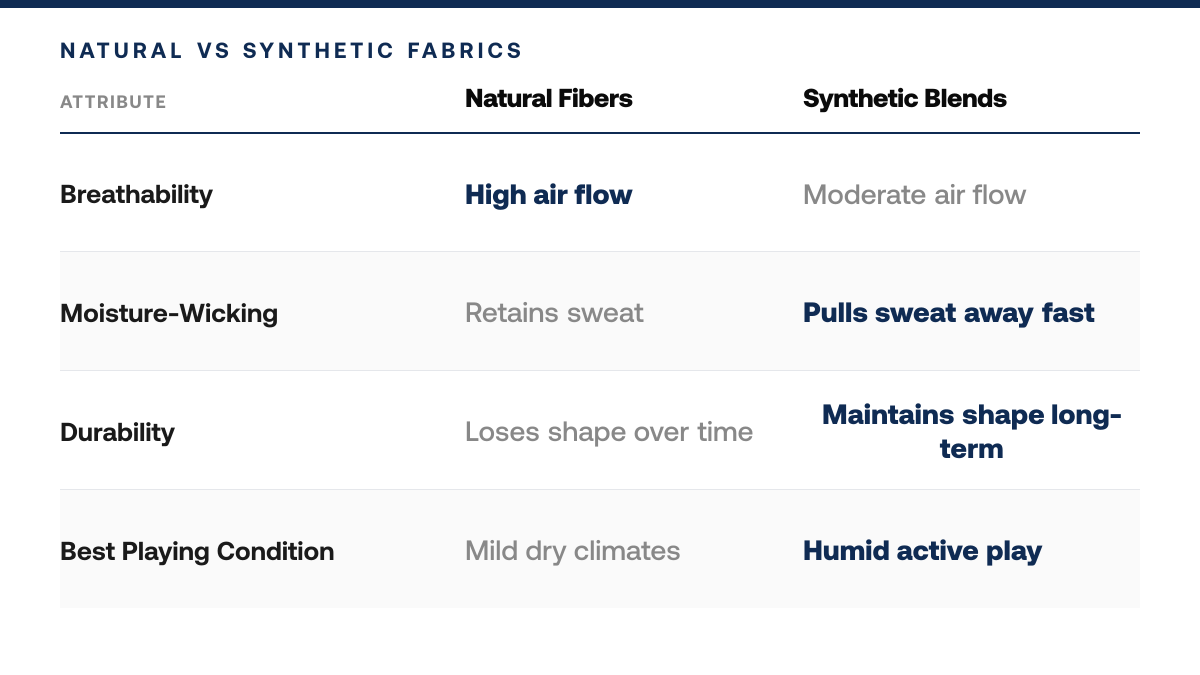
Breathability and moisture-wicking are two distinct fabric properties that often get confused but serve different functions in golf apparel. Breathability refers to how easily air flows through the fabric, allowing heat to escape from your body and keeping you cooler during play. Moisture-wicking, by contrast, is the fabric's ability to pull sweat away from your skin and move it to the surface where it can evaporate. While both properties work together to enhance comfort, they operate independently, a fabric can be breathable without being an effective moisture-wicker, and vice versa. Understanding the difference helps you choose a polo that truly matches your climate and activity level.[2]
How Fabric Composition Affects Performance
The material makeup of your polo, whether natural fibers like cotton, synthetic options like polyester, or blended combinations, fundamentally determines how it performs in heat, humidity, and during active play. Natural fabrics offer breathability and comfort but may retain moisture, while synthetics excel at moisture-wicking and quick-drying. Blended fabrics attempt to balance these strengths, combining the comfort of natural fibers with the performance benefits of synthetics. Your choice depends on where and how you play: humid tropical courses demand superior moisture management, while temperate climates may prioritize breathability and feel. Selecting the right composition ensures your polo keeps you comfortable from the first tee to the eighteenth green.
The Growing Demand for Performance Golf Wear
Golf apparel has evolved dramatically as more players recognize the connection between fabric quality and on-course performance. With 45 million golf participants in North America in 2023, up from 41.1 million in 2022, the market for high-performance polos continues to expand. Players increasingly seek apparel that combines style with technical features, fabrics that manage sweat, regulate temperature, and maintain their appearance through eighteen holes. This shift reflects a broader lifestyle trend where golf wear transcends the course, becoming everyday casual wear. As a result, manufacturers invest heavily in fabric innovation, offering golfers more choices than ever to find a polo that matches their personal style, climate needs, and performance expectations.
Key Numbers for How to Choose the Right Golf Polo Fabric for Your Game (2026)
42%, shirts segment's share of total golf clothing market revenue in 2022, underscoring how central the polo is to golf apparel spending.
Over 60% of golfers purchase apparel annually, sustaining year-round demand for performance fabrics across all climates and conditions.
45 million golf participants in North America in 2023, up from 41.1 million in 2022, a growing audience with rising expectations for technical fabric performance.[3]
~27% of consumers prefer golf apparel made from recycled or organic materials, signaling that fabric composition is a purchasing decision, not just a comfort one.[3]
Nearly 40% of new golf apparel lines now feature eco-friendly materials, reflecting how breathability and moisture-wicking innovation is reshaping fabric choices.[3]
$4.94 billion, projected global golf apparel market size by 2030, growing at a 7.1% CAGR, driven in part by demand for high-performance polo fabrics.
Step-by-Step Process
1. Assess Your Climate and Play Frequency
Start by evaluating the climate where you play most often and how frequently you golf. Hot, humid conditions demand breathable, moisture-wicking fabrics that keep sweat off your skin, while cooler climates allow for denser, warmer materials. Consider whether you play year-round or seasonally, and whether you prefer versatile pieces that work across multiple seasons or sport-specific fabrics optimized for particular conditions. Your play frequency also matters, daily golfers benefit from durable, quick-drying compositions, while occasional players can prioritize comfort and style over extreme performance features.
2. Evaluate Fabric Composition and Weight
Examine the fiber blend, weight, and construction of potential polos. Polyester and polyester-blend fabrics typically offer superior moisture management and durability compared to pure cotton. This is exactly the kind of detail Haven Golf Company builds its products around. Lighter-weight fabrics (under 5 ounces) excel in warm weather, while heavier constructions provide structure and warmth in cooler seasons. Check the fabric's thread count and weave pattern, tighter weaves resist pilling and maintain shape through repeated wear and washing. Understanding these technical specifications helps you match the polo's performance characteristics to your specific needs, whether that's maximum breathability, wrinkle resistance, or color retention.[4]
3. Consider Personal Comfort Preferences
Reflect on how you prefer fabrics to feel against your skin and move during your swing. Some golfers favor soft, stretchy materials that allow unrestricted motion, while others prefer crisp, structured fabrics that maintain a polished appearance. It's the standard Haven Golf Company holds every piece in its range to. Think about collar preference, some styles sit flat and stiff, others are softer and more relaxed. Consider whether you want UV protection, antimicrobial treatments, or eco-friendly materials. Personal comfort is subjective, so prioritize what makes you feel confident and unrestricted on the course.
How This Works in Practice
Example 1: The Weekend Golfer Seeking Comfort and Team Pride
Picture a weekend golfer who plays casual rounds at his local course and wants apparel that reflects both his comfort priorities and his loyalty to his college team. He's tried standard cotton polos in the past but found them heavy and prone to clinging to his body on warm days. After learning about moisture-wicking synthetic blends, he switches to a performance polo in his school colors, one that pulls sweat away from his skin and dries quickly between holes. The shift transforms his experience: he stays cooler, moves more freely during his swing, and feels a genuine sense of pride wearing his alma mater's colors on the course. His playing partners notice the distinctive design and often compliment the look, turning his apparel choice into a conversation starter that reinforces his identity as both an athlete and a loyal supporter.[1]
Fabric Types: Performance Strengths and Trade-offs
Fabric Type
Key Strength
Potential Limitation
Natural fibers (cotton)
Breathability and comfort feel
May retain moisture during active play
Synthetic (polyester)
Superior moisture-wicking and quick-drying
Can lack the comfort feel of natural materials
Blended fabrics
Balance of comfort with performance benefits
Requires careful selection to optimize both properties
Example 2: The Competitive Player Balancing Patriotism and Performance
Consider a competitive amateur golfer who enters tournaments and wants statement apparel that showcases patriotic pride without sacrificing the technical edge he needs for serious play. He gravitates toward a premium polo blending polyester and spandex, fabrics chosen specifically for their stretch and durability under tournament conditions. The garment's patriotic design becomes part of his mental game: wearing colors and symbols that matter to him boosts his confidence on the first tee, while the fabric's performance properties ensure he can focus on his swing rather than adjusting his shirt between shots. Over a season of play, he discovers that the combination of personal meaning and technical reliability keeps him comfortable and mentally sharp, allowing him to compete at his best while expressing values that matter to him.[1]
Identity and Performance Work Together
Both golfers discovered that the right fabric choice isn't just about staying dry or looking sharp, it's about aligning apparel with identity and play style. Whether you're seeking team affiliation, patriotic expression, or personal style, matching that choice to a fabric suited for your climate and swing intensity ensures your statement polo performs as hard as you do on the course.
Golf Polo Fabric & Fit Evaluation Checklist
Check the fabric content label to confirm moisture-wicking capability for your climate and activity level.
Test the collar structure and neckline fit against your typical golf shirt sizing to ensure comfort during your swing.
Inspect seam placement and sleeve length to verify they won't restrict arm movement during your golf stroke.
Feel the fabric weight and breathability in person before purchasing to match your preferred comfort profile.
Common Mistakes to Avoid
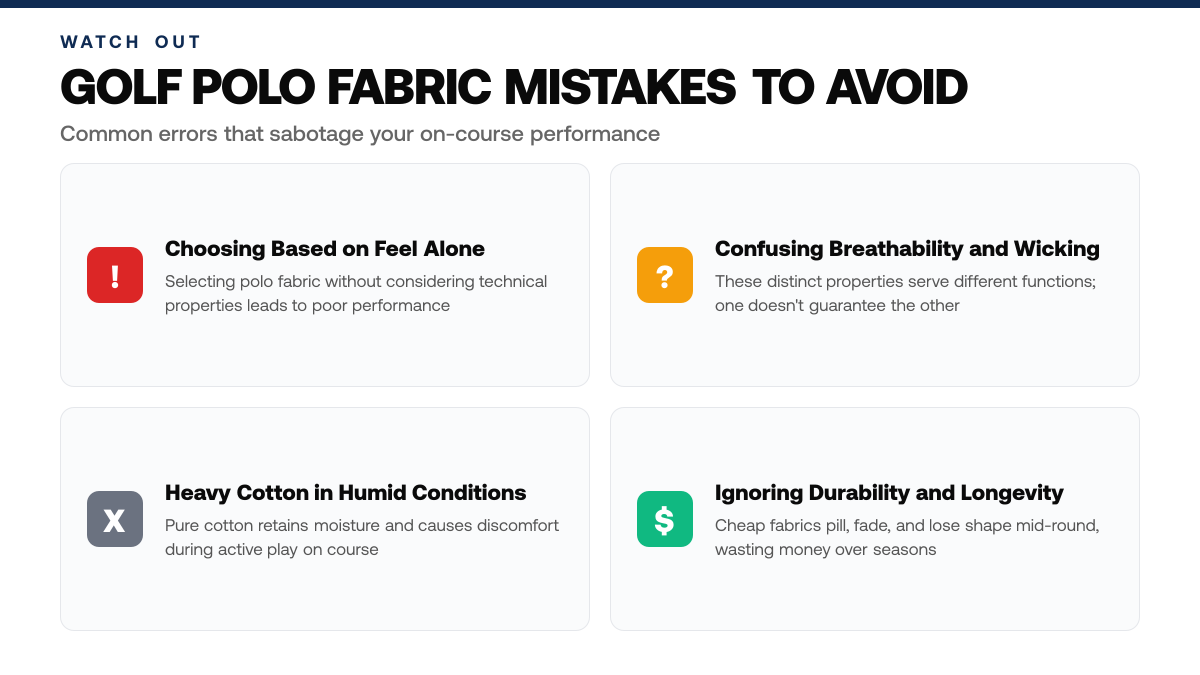
Mistake: Choosing polo fabric based on brand name or price alone without checking fiber content
Selecting a polo purely for its label or cost overlooks critical fabric properties, like breathability, moisture-wicking, and durability, that directly impact comfort and longevity on the course. A premium brand doesn't guarantee performance if the fabric composition doesn't suit your game. Always examine fiber content (cotton, polyester blends, synthetic) before purchasing to ensure the polo will perform when you need it.[5]
Choose Your Fabric by Playing Conditions
Course Climate
Primary Concern
Recommended Approach
Humid tropical courses
Superior moisture management
Prioritize synthetic blends with advanced wicking
Temperate climates
Breathability and natural feel
Balanced blend or breathable natural option
Variable or seasonal play
Versatile performance across conditions
Technical blend that handles both heat and moisture
Mistake: Ignoring climate and activity level when picking fabric weight or composition
Wearing a heavy cotton polo in hot, humid conditions or a lightweight synthetic in cool weather leads to discomfort and poor performance. Your fabric choice must match both your local climate and the intensity of your play, warm climates demand breathable, moisture-wicking synthetics, while temperate regions may suit cotton blends. Assess your typical playing conditions before committing to a fabric type.[5]
Mistake: Neglecting to test fabric care requirements before committing to a polo style
High-performance fabrics often demand specific washing and drying protocols to maintain their properties. Ignoring care labels leads to shrinkage, fading, and loss of moisture-wicking ability over time. Read and follow manufacturer care instructions carefully, many performance polos require cold water, gentle cycles, or air-drying to preserve their functionality and appearance through repeated wear.
Fabric Becomes the Foundation
The choice of polo fabric is rarely the first thing a golfer notices about their own game, yet it shapes every movement on the course. Once the right material is selected, one that breathes with the body, moves with the swing, and holds up through eighteen holes, the mental space opens. The game itself becomes clearer, less cluttered by distraction. This is where fabric selection stops being about technical specs and starts being about permission: permission to focus on what actually matters.
Frequently Asked Questions
How do I care for golf polos to extend their lifespan?
Wash golf polos in cool water and air-dry them to preserve fabric elasticity and color vibrancy. Machine drying and high heat accelerate wear, particularly in performance blends with synthetic fibers. Check the garment's care label for specific instructions, as moisture-wicking and stretch fabrics often require gentler handling than 100% cotton. Proper care directly impacts durability and maintains the fit and performance properties that justify your investment.[3]
Will my golf polo shrink after washing?
Fabric behavior after washing depends on fiber content and construction. Cotton-dominant blends tend to shrink slightly in hot water, while polyester and nylon blends are more stable. Pre-shrunk fabrics, common in modern golf apparel, minimize this risk. Always follow the manufacturer's care instructions and wash in cool water to reduce shrinkage. Testing one garment before committing to multiple polos in the same style helps you understand how a specific fabric will respond.[3]
How does fabric choice affect polo fit and comfort during a round?
Breathable, moisture-wicking fabrics keep you dry and comfortable as body temperature rises during play. Stretch blends allow unrestricted arm movement for your swing, while heavier cotton may feel restrictive or cling when damp. Fit also depends on how the fabric drapes, looser weaves offer more freedom, while tight knits provide a sleeker look. Trying on polos in the exact fabric you plan to purchase ensures the fit and feel match your preferences and playing style.[3]
How to Choose Golf Polo Fabric for Your Swing Type — Walk into any pro shop and you'll notice something that wasn't true a decade ago: golfers are as deliberate about their polo fabric as they are about their clubs. The…
How to Choose Golf Polos for Hot Weather Golf — Step onto the course on a sweltering afternoon and you'll notice immediately which golfers chose their polos thoughtfully and which ones didn't. The ones drenched in…