Build Your College Alumni Golf Trip Planning Checklist
A group of college friends gathers at a course they've never played before, trading stories between shots while enjoying the kind of camaraderie that only alumni can share. These trips blend competitive golf with travel, nostalgia, and the simple pleasure of time away from daily life. Yet pulling off a successful alumni golf outing demands far more than just showing up—it requires careful planning across multiple fronts.
Alumni golf trips have become a cherished tradition for many college communities, offering a chance to reconnect while pursuing a sport that brings people together. According to travel advisors and golf planning resources, these outings involve coordinating everything from destination selection and course availability to accommodations and group logistics. The complexity grows when you're managing multiple schedules, preferences, and budgets across a scattered group.
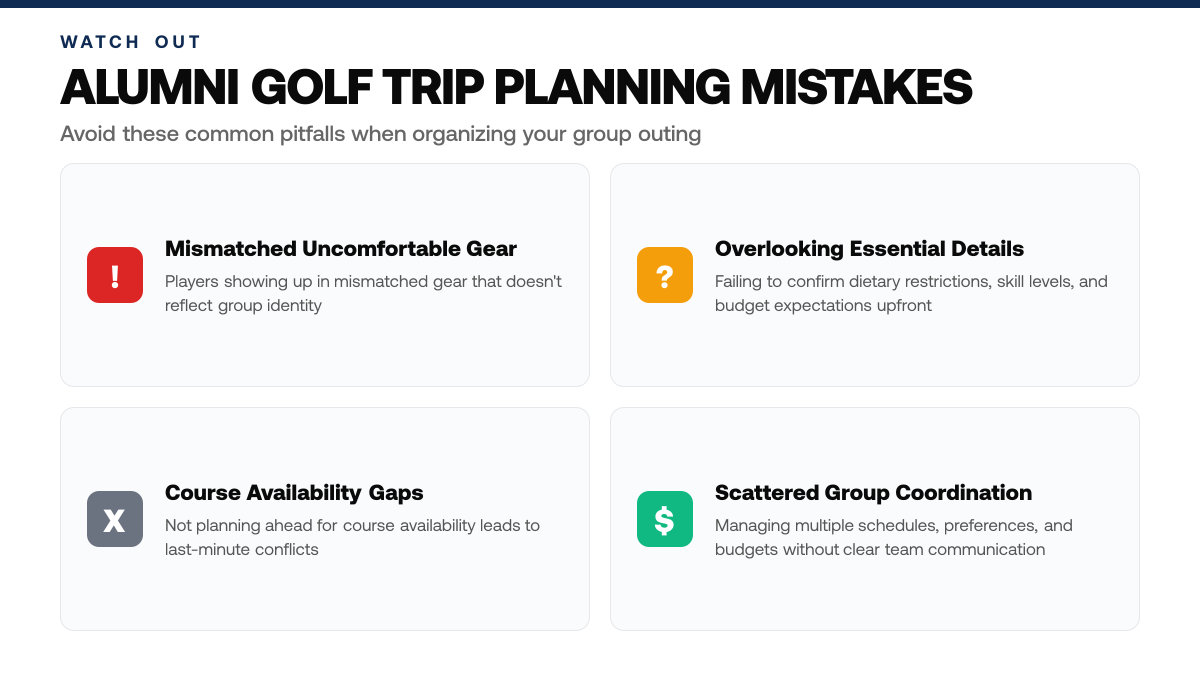
This guide walks you through the essential steps for planning a memorable alumni golf trip. You'll learn how to research and book the right destination, coordinate logistics with your group, handle communication effectively, and prepare a checklist that covers every detail. By the end, you'll have a clear roadmap for turning a casual idea into an experience your classmates will remember for years. Alumni golf trips fall apart when players show up in mismatched, uncomfortable gear that doesn't reflect the group's identity — Haven Golf Company's themed college town polos in Airflex™ material ensure everyone looks unified and feels unrestricted through 18 holes.
TL;DR
A college alumni golf trip checklist should address destination selection, course reservations, travel logistics, accommodations, and group coordination to ensure a seamless experience.
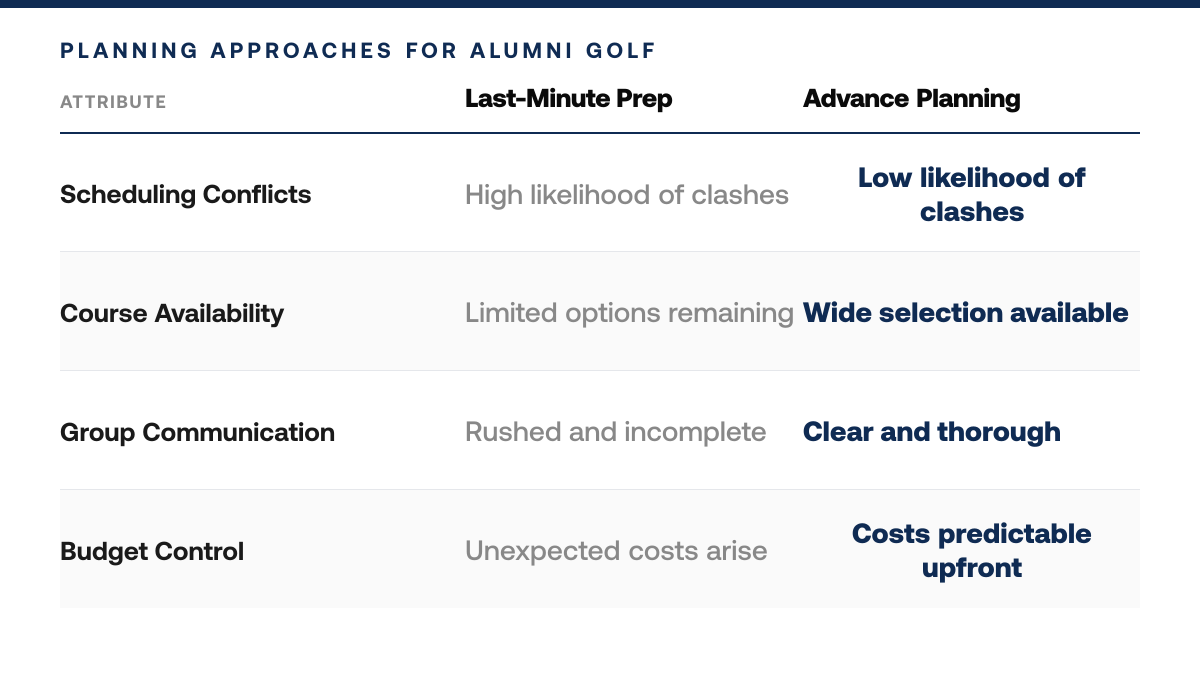
Planning ahead for course availability, transportation, lodging, and team communication prevents last-minute conflicts and keeps the group aligned on timing and preferences.
Many organizers overlook the importance of confirming dietary restrictions, skill levels, and budget expectations upfront—details that shape course selection and accommodation choices.[1]
Understanding Alumni Golf Trips
What Is an Alumni Golf Trip?
An alumni golf trip is an organized travel experience designed to reconnect former classmates through rounds of golf at curated courses. These trips combine structured play with social bonding, typically featuring a planned itinerary that includes tee times, accommodations, and group meals. Unlike casual outings, alumni golf trips are coordinated events that bring together golfers of varying skill levels and backgrounds, creating a framework for meaningful reconnection while enjoying the sport.
Why Alumni Golf Trips Matter
Alumni golf trips serve as powerful reconnection vehicles for classmates who may have drifted apart over the years. They create dedicated time and space for catching up, sharing stories, and rebuilding relationships in a relaxed, enjoyable setting. For many participants, these trips represent a rare opportunity to step away from daily responsibilities and spend quality time with people who share a common history. The combination of golf, travel, and camaraderie makes these events memorable and often becomes an anticipated annual or biennial tradition within alumni networks.
Planning Complexity and Key Considerations
Successful alumni golf trip planning requires balancing multiple competing factors into a cohesive experience. Organizers must account for varying skill levels among participants, select appropriate courses that challenge without frustrating, manage budget constraints to keep costs accessible, and incorporate group preferences around pace, dining, and accommodations. This multifaceted coordination ensures that every attendee—whether a scratch golfer or a casual player—feels included and satisfied with the overall trip structure and value. Additionally, considering dietary needs, transportation preferences, and accessibility requirements early in planning prevents surprises that could diminish the experience for any participant.
Key Numbers for College Alumni Golf Trip Planning (2026)
Peak golf travel windows vary by destination—spring and fall attract the most bookings, requiring 8–12 weeks advance planning for popular courses.
Group size of 8–16 golfers is typical for alumni trips, influencing course selection, accommodation options, and overall budget allocation.
Course difficulty ratings (slope and handicap index) directly affect player skill matching and destination appeal for mixed-ability alumni groups.
Budget ranges of $2,000–$5,000 per person (all-inclusive) shape destination tier, course prestige, and lodging quality for multi-day trips.
Seasonal destination popularity peaks in March–May and September–October, requiring earlier deposits and course reservations than off-season travel.
Step-by-Step Process
1. Define Your Trip Goals and Destination
Start by clarifying what you want from the alumni golf trip. Are you focused on competitive play, networking with classmates, or a relaxed getaway? Once your goals are set, select a destination that matches your group's skill level and interests. Research courses that align with your vision—whether that means championship layouts, scenic public tracks, or resort destinations. Document your top choices and discuss them with fellow alumni to build consensus before moving forward. During this phase, survey potential participants about their availability windows, preferred climate, and budget comfort level. These insights guide your destination shortlist and prevent booking a trip during a time when key attendees can't participate.[1]
2. Book Courses and Arrange Accommodations
Secure tee times at your chosen courses well in advance, especially if planning during peak season. Contact the pro shops directly or use booking platforms to lock in dates and rates. This is where Haven Golf Company's apparel planning matters, ensuring your team coordinates visually across multiple courses. Simultaneously, research and reserve lodging near the courses—hotels, vacation rentals, or golf resorts that can accommodate your group. Confirm that accommodations offer convenient access to the courses and have amenities your group values, such as dining options or meeting spaces for evening gatherings. Request group discounts where possible, and verify cancellation policies in case circumstances change.[1]
3. Coordinate Group Logistics and Payments
Establish a clear communication channel for all participants and share a detailed itinerary including tee times, course locations, and check-in details. Create a shared cost breakdown covering green fees, accommodations, meals, and transportation. Set payment deadlines and collection methods to ensure everyone contributes fairly. Assign roles—such as a trip coordinator, transportation manager, and social organizer—to distribute responsibilities and keep planning on track. Consider creating a shared document or group chat where participants can ask questions, confirm attendance milestones, and share updates about travel logistics or equipment needs.
4. Confirm All Reservations and Final Details
Two to three weeks before departure, verify all course bookings, accommodation confirmations, and transportation arrangements. Contact the pro shops to reconfirm tee times and any special requests. Check that all participants have received the final itinerary, know their assigned groups or foursomes, and understand the dress code or equipment requirements. Address any last-minute changes or cancellations promptly to avoid disruptions to the group experience. Send a final checklist to attendees confirming what to bring, parking instructions, and contact information for the trip coordinator in case of emergencies.
How This Works in Practice
Example 1: The Tight-Budget Small Group
Picture a group of 8 alumni from a mid-sized state school who want to organize a golf trip within a modest budget. They're split across skill levels—a couple of low handicappers, a few mid-range players, and some casual golfers who play a handful of times a year. Rather than booking an expensive destination resort, they identify a solid public course within driving distance, schedule the trip over a long weekend, and keep logistics simple: shared rentals, one hotel block, and a single dinner reservation. By front-loading the planning checklist—confirming availability 6 weeks out, collecting payment upfront, and assigning one person to handle course and lodging details—they avoid last-minute scrambling. The result is a relaxed, affordable outing where everyone plays at their own pace, enjoys the social time, and stays within budget. No fancy amenities needed; the focus is on camaraderie and golf.
Example 2: The Larger, Multi-Skill Destination Trip
Consider a group of 24 alumni planning an ambitious golf destination trip to a warm-weather region known for championship courses. The group spans from serious competitors (some with single-digit handicaps) to recreational players, plus a few spouses who want to participate in non-golf activities. The organizers use the checklist to segment the group: they book two different courses—one challenging layout for the skilled players, one more forgiving option for mid-to-high handicappers—and stagger tee times over 3 days. They arrange a group dinner, a casual social event, and flexible evening activities so partners can enjoy the destination beyond the course. By mapping out accommodations early, securing group rates, and clearly communicating the itinerary weeks in advance, they balance competitive play with inclusive social time. The larger group size actually helps—shared costs spread across 24 people make premium accommodations and quality courses more accessible than a solo traveler might expect.
Why Planning Upfront Matters
Both trips succeed because the organizers invested time in a structured checklist before booking anything. Small groups thrive on simplicity and affordability; larger groups benefit from segmentation and clear communication. In either case, nailing down who's playing, what skill levels are present, and what the group values—competitive play, social time, or a mix—shapes every decision that follows. A checklist keeps those priorities front and center, turning a potential logistical headache into a smooth, memorable experience.
College Alumni Golf Trip Planning Checklist
Confirm all participants' golf handicaps and skill levels to balance foursomes and course difficulty.
Verify course tee times, cart assignments, and any dress code requirements weeks in advance.
Collect passport or ID copies and confirm travel dates with all attendees to coordinate transportation.
Arrange group accommodations, meal plans, and social events to maximize alumni bonding opportunities.
Collect dietary restrictions, accessibility needs, and transportation preferences from all participants early in planning.
Create a shared expense tracking document and establish clear payment deadlines to avoid confusion.
Designate a point person for each logistical area (courses, lodging, transportation, communications) to streamline decision-making.
Common Mistakes to Avoid
Mistake: Underestimating travel time and logistics
Alumni golf trips often span multiple days across unfamiliar courses and venues. Failing to account for driving time, course routing, and group coordination creates bottlenecks that compress practice rounds and delay meals. Build in buffer time for each leg of the journey and confirm course start times with all participants well in advance to keep the itinerary on track.[2]
Mistake: Packing inadequate or inappropriate golf gear
Bringing insufficient layers, wrong footwear, or substandard equipment undermines performance and comfort over multiple rounds. Research the destination's climate and course conditions, then pack versatile pieces—moisture-wicking base layers, weather-resistant outerwear, and supportive golf shoes—that work across varying conditions. TravelPro's packing guidance emphasizes organizing gear by round and weather scenario to avoid last-minute scrambling.[2]
Mistake: Skipping pre-trip course research and group communication
Not reviewing course layouts, handicap requirements, or local rules before arrival wastes time on-site and creates confusion about tee assignments and pace of play. Establish a shared communication channel weeks ahead to discuss course specifics, confirm handicaps, assign foursomes, and clarify expectations around dress code and meal plans. Clear upfront communication prevents day-of conflicts and ensures everyone arrives prepared.
Frequently Asked Questions
What should I pack for a golf trip?
Pack lightweight, moisture-wicking apparel, comfortable golf shoes, and weather-appropriate layers. According to packing guides for golf trips, you'll want to include multiple polos or golf shirts, a light jacket or sweater for cooler mornings, and accessories like hats and sunglasses. Bring enough socks and undergarments for each day, plus a light toiletries bag. Check the destination's climate forecast before finalizing your list to avoid overpacking.[3]
How far in advance should I book a golf trip with alumni?
Begin planning several months ahead, especially if coordinating with multiple people or booking premium courses. Early booking allows you to secure preferred tee times, negotiate group rates, and give participants adequate notice to arrange time off work. For popular destinations or peak seasons, booking within a few months ensures better availability and pricing options.
What's the best way to handle costs and split expenses?
Designate one person to collect fees upfront and track shared expenses like lodging, cart rentals, and meals. Use a shared spreadsheet or simple payment app to log who paid what, then settle differences at the end of the trip. Be transparent about what's included in the initial fee versus what's optional, and confirm everyone's budget comfort level before committing.
5 Best College Town Golf Polos to Rep Your School Style — Walk into any college town pro shop or onto a weekend fairway, and you'll spot them: polos emblazoned with school colors, mascots, and alumni pride. For golfers who want…