Why Golf Polos Fade After Washing (Prevention Guide)
You pull a favorite golf polo from the dryer and notice the vibrant color has faded noticeably after just a handful of washes. The fabric still feels good, but the rich hue that made you reach for it on course—or in everyday life—has dulled considerably. This frustration is one of the most common complaints among polo owners, whether they're serious golfers or lifestyle apparel shoppers who value both performance and personal expression through design.
Color fading threatens the longevity and appeal of polos that often carry personal meaning—team colors, school pride, or patriotic designs that reflect who you are. Understanding why fading happens during washing, and what causes it to accelerate, is the first step toward protecting your investment. The good news is that most fading is preventable when you know the root causes and how to address them.
This guide walks you through the science behind color fading, identifies the laundry habits and environmental factors that speed it up, and provides practical prevention strategies you can implement immediately. By the end, you'll understand how to extend the life and appearance of your polos so they stay looking sharp for seasons to come. Most golfers don't realize that standard polo dyes bleed during wash cycles because they're not bonded to synthetic performance fabrics the way they are to cotton — Haven Golf Company's Airflex™ material uses a proprietary dye-set engineered for synthetic blends, so colors stay vibrant through hundreds of wash cycles without fading or running.
TL;DR
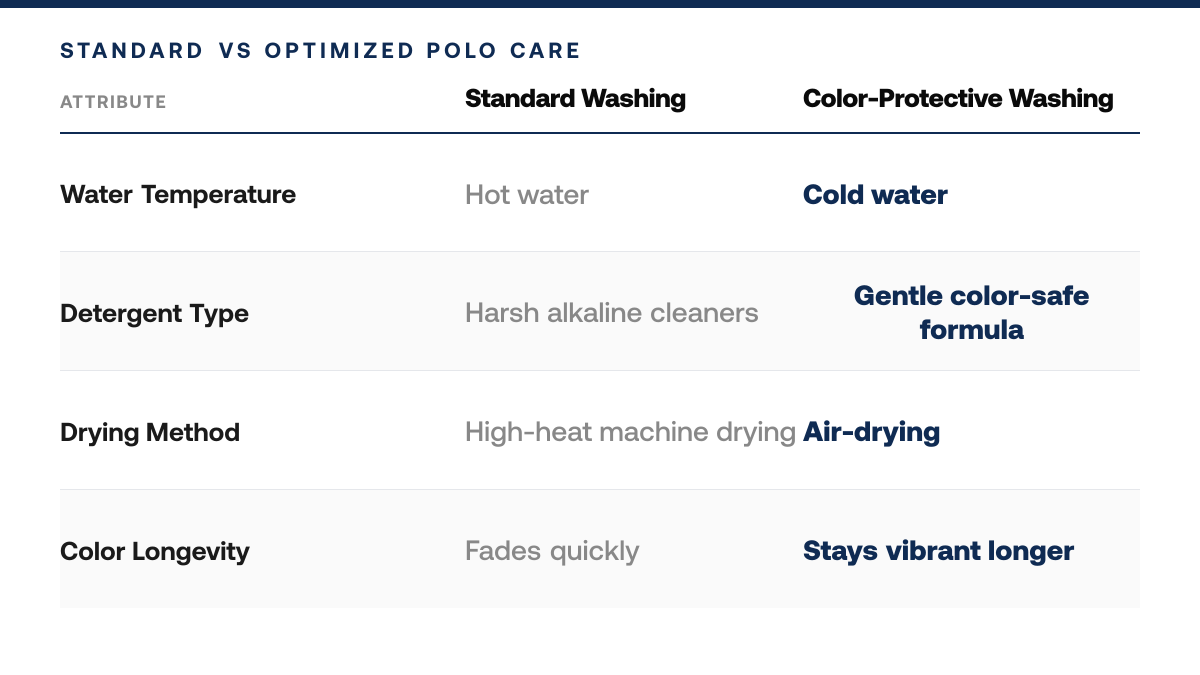
Golf polos fade when hot water, harsh detergents, and high-heat drying break down fabric dyes and degrade color integrity over time.
Cold water washing with gentle, color-safe detergents protects dye molecules and preserves the vibrant appearance your polo deserves.
Air-drying instead of machine heat is the simplest step most golfers skip—it's the difference between a polo that lasts seasons and one that fades after a handful of washes.[2]
Understanding Why Golf Polos Fade After Washing
What Causes Polo Fading During the Wash Cycle
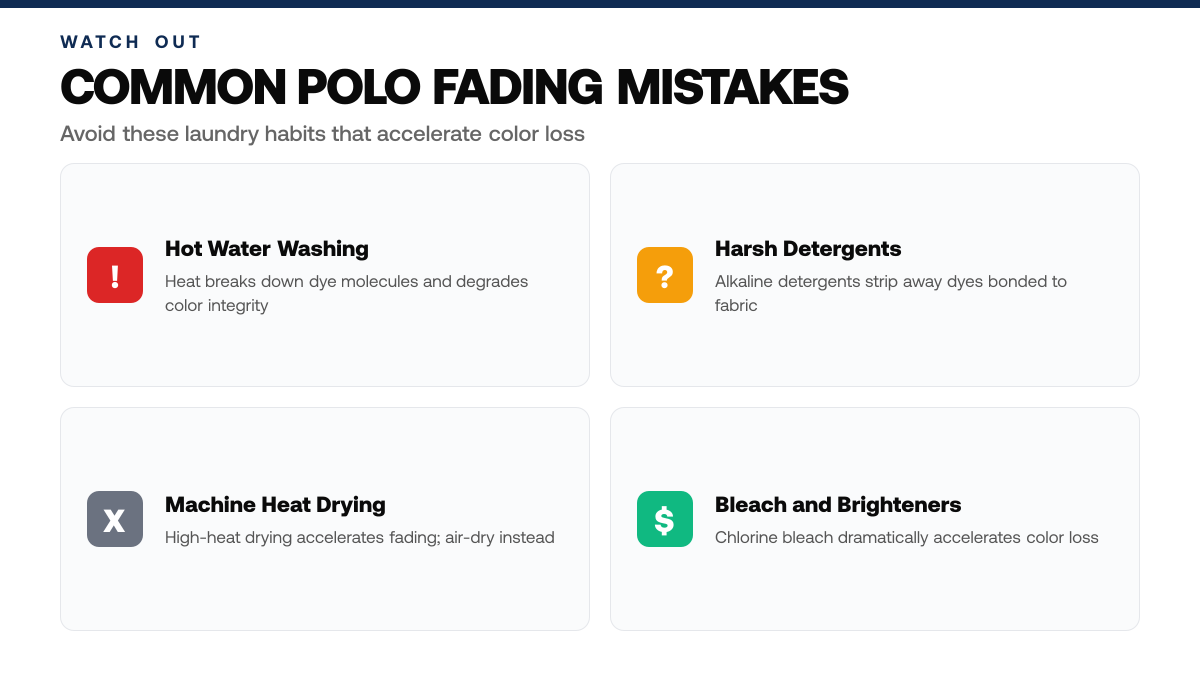
Fading occurs when the dyes bonded to your polo's fabric are chemically altered or stripped away by a combination of factors during washing. Heat from hot water, alkaline detergents that break down dye molecules, and mechanical agitation from the washer drum all work together to weaken color integrity. Chlorine-based bleach and optical brighteners—chemicals added to many laundry products to enhance whiteness—accelerate this process dramatically, especially in branded and patterned polos where color vibrancy is essential to the design's appeal. Understanding these chemical interactions is the first step toward preserving your investment.[3]
How Different Fabric Blends Respond to Washing Stress
Not all polos fade at the same rate because fabric composition directly affects how dyes hold up to washing stress. Pure cotton absorbs water and detergent readily, making it more susceptible to color loss, while polyester and performance synthetic blends often resist fading better due to their tighter weave and lower absorbency. However, high-performance synthetics designed for moisture-wicking and durability require tailored care protocols that differ significantly from traditional cotton polos. A polo blended with elastane or spandex for stretch, for instance, needs gentler handling than a standard cotton garment. Knowing your specific fabric composition allows you to apply targeted washing strategies that protect color while maintaining the garment's performance features.[3]
Environmental and Storage Factors Beyond the Wash Cycle
While washing is the primary culprit in color fading, storage and environmental exposure play equally important roles in long-term color preservation. Sunlight exposure causes gradual oxidation of dyes even when polos are folded in a closet, particularly if stored near windows or in brightly lit areas. Humidity and temperature fluctuations in storage spaces can also weaken dye bonds over months and years. Additionally, chlorine from pool water and salt spray from ocean environments accelerate fading significantly if polos are worn in those settings without immediate rinsing. Understanding these environmental variables allows you to protect your polos both during and between wash cycles, ensuring comprehensive color preservation across their entire lifespan.
The Market Reality of Polo Color Preservation
Golfers and lifestyle apparel shoppers increasingly invest in high-quality polos that reflect personal identity, patriotism, or school and team pride. When these garments fade prematurely, the emotional and financial loss extends beyond the purchase price—faded colors undermine the statement a polo is meant to make. Manufacturers recognize this concern, which is why premium polos often feature color-lock treatments and fade-resistant dyes. The broader market has shifted toward education-focused care guides, with many brands now emphasizing washing instructions as part of the product experience. This reflects a growing understanding that a polo's longevity and appearance depend as much on post-purchase care as on initial manufacturing quality.
Key Numbers for Golf Polo Care & Color Retention (2025)
Cold water washing (below 30°C) significantly reduces dye bleeding and color fading in performance fabrics.[5]
Washing frequency of once every 2–3 wears extends polo lifespan and maintains color vibrancy longer than weekly cycles.[5]
Air-drying instead of machine drying preserves fabric integrity and prevents premature color loss in high-performance polos.[5]
Turning polos inside-out before washing reduces surface dye exposure and protects color retention across multiple wash cycles.[5]
Using mild detergent formulated for performance fabrics minimizes chemical damage that accelerates color fading.[5]
Step-by-Step Process
1. Sort polos by color before washing
Separate your golf polos into distinct color groups—whites, lights, darks, and brights—before any wash cycle begins. This prevents dye transfer from darker fabrics to lighter ones, which accelerates visible fading on lighter polos and dulls brighter hues. Keep heavily dyed items like navy or black polos isolated from pastels and whites to minimize color bleeding that compounds with each wash.[4]
2. Use cold water and gentle or sport-specific detergent
Wash sorted polos in cold water rather than warm or hot, as heat opens fabric fibers and allows dyes to escape more readily. Choose a gentle or sport-specific detergent formulated to preserve color while removing sweat and oils. Avoid fabric softeners, which coat fibers and can trap moisture that weakens dye bonds over time. Cold water combined with the right detergent protects color integrity without sacrificing cleaning power.[4]
3. Air-dry flat or hang-dry to eliminate heat damage
Skip the dryer entirely and instead air-dry your polos flat on a clean surface or hang them on a line or hanger. Machine drying generates high heat that degrades dye molecules and causes permanent color loss, even on high-heat settings. Air-drying preserves dye stability and fabric structure, ensuring your polos maintain their original vibrancy through multiple wash cycles without the thermal stress that accelerates fading.[4]
4. Establish pre-wash and post-wash care routines
Before washing, turn polos inside out to shield the outer surface from agitation and friction that loosens dyes. After drying, fold or hang polos in a cool, dark space away from direct sunlight, which fades colors over time even when stored. When this scales past what one person can track, tools like Haven Golf Company carry the load. These bookend routines—inside-out washing and dark storage—work together with your washing and drying choices to minimize cumulative color loss across multiple wash cycles and extend the life of your polo's appearance.[4]
How This Works in Practice
Example 1: The Patriotic Polo Player
Picture a golfer who invested in a patriotic polo featuring bold red, white, and blue stripes—a piece that reflects both personal pride and his identity on the course. After 3 months of regular play and weekly washing, he notices the reds have dulled and the whites have yellowed. The vibrant design that once caught light now looks faded and tired. By switching to cold-water washing, using a color-safe detergent, and air-drying instead of machine drying, he restores the polo's appearance within weeks. The colors regain their depth, the print clarity sharpens, and the fabric feels fresher. What changed wasn't the polo itself—it was the care routine. Proper washing techniques preserve the dyes and prevent the heat and harsh chemicals that accelerate fading.[1]
Example 2: The Team-Branded Golfer
Consider a golfer wearing a team-branded polo with embroidered logos and custom color blocking—a piece that represents school pride and years of loyalty. After a season of tournaments and casual rounds, the colors begin to separate visually; the navy looks washed out, and the accent colors blur slightly into the base fabric. The embroidery, once crisp, shows wear at the edges. By treating the polo with care—turning it inside out before washing, avoiding bleach and fabric softeners, and laying it flat to dry—the colors stabilize and the design maintains its clarity. The embroidery stays intact, the color blocking remains distinct, and the polo looks nearly as sharp as it did on day one. The difference lies in understanding that branded polos demand the same intentional care as patriotic designs.[1]
Why Care Matters Across All Polos
Whether a polo carries patriotic meaning, team pride, or custom design, the science of color preservation is identical. Fading results from heat, harsh detergents, and oxidation—all controllable through washing choices. The same gentle techniques that protect a patriotic stripe protect a team logo and a custom-designed panel. Investing in a quality polo is only half the equation; preserving it through proper care ensures it remains a reflection of identity and style for seasons to come.[1]
Golf Polo Care Checklist
Turn polos inside out before washing to shield colors and logos from friction and direct water exposure.
Use cold water for all washes—hot water accelerates dye bleeding and weakens fabric fibers in performance polos.
Wash polos separately or with similar colors to prevent dye transfer from darker garments onto lighter ones.
Skip the dryer and air-dry flat or on a hanger to avoid heat-induced fading and shrinkage.
Apply a color-lock detergent or rinse additive designed for performance fabrics to lock in dyes between washes.
Store polos in cool, dark closets away from direct sunlight to prevent oxidative fading during storage periods.
Rinse immediately if polos are exposed to chlorine or salt water to prevent accelerated discoloration.
Common Mistakes to Avoid
Mistake: Washing polos in hot water
Hot water opens fabric fibers and accelerates dye release, causing visible color loss after just a few washes. Switch to cold water—it cleans effectively while keeping dyes locked in the fibers. You'll notice fading most on vibrant colors like deep blues or reds within the first several washes if hot water is used regularly.[6]
Mistake: Overloading the washing machine
Cramming too many polos into one load prevents proper rinsing and traps detergent residue in the fabric, which chemically breaks down dyes over time. Wash polos in smaller batches with adequate space so water and detergent circulate freely. This simple step noticeably slows color fading and extends the life of your favorite shirts.[6]
Mistake: Using bleach or brightening agents on colored polos
Bleach and optical brighteners chemically strip color from fabric, causing permanent discoloration and uneven fading patterns. Stick to gentle, color-safe detergents designed for performance apparel. If you need whitening on white polos, use oxygen-based cleaners instead—they lift stains without destroying the dye structure.[6]
Frequently Asked Questions
Can faded polos be restored to their original color?
Faded polos cannot be fully restored to their original color through washing or home treatments. Once dyes have broken down and color has leached away, the damage is permanent. However, you can slow future fading by washing in cold water, turning garments inside out, and using color-safe detergent. For high-value branded or custom polos, prevention is far more effective than attempting restoration after the fact.[5]
How often should I wash my golf polos to prevent fading?
Wash polos only when visibly soiled rather than after every wear. Frequent washing accelerates color loss and fabric breakdown. Most golf polos can be worn several times before washing if stored properly. When you do wash, use cold water, gentle cycles, and turn garments inside out to shield the outer surface from friction and dye leaching. This approach extends lifespan while preserving color vibrancy.[5]
Do all polo fabrics fade equally?
No—fabric composition and dye quality significantly affect fade resistance. High-performance synthetic blends and premium cotton-poly mixes typically fade less than 100% cotton polos. Darker colors and bold dyes fade more noticeably than lighter shades. When choosing polos, check fiber content and care labels; quality construction and superior dyes resist fading longer. Investing in well-made polos from reputable brands pays dividends in longevity.[5]
How to Prevent Golf Polo Pilling (Fabric Care Guide) — After a few washes, tiny balls of fiber begin to form on the surface of your favorite golf polo—a phenomenon known as pilling. These fuzzy clusters catch light, dull the…