Couples who step onto the course together often discover that golf offers something rare: a shared activity that demands focus, patience, and genuine teamwork. Whether you're playing for fun or keeping score, the round becomes a window into how you communicate under pressure and support each other through frustration. That dynamic—how you both show up on the course—shapes whether the experience strengthens your bond or creates tension.
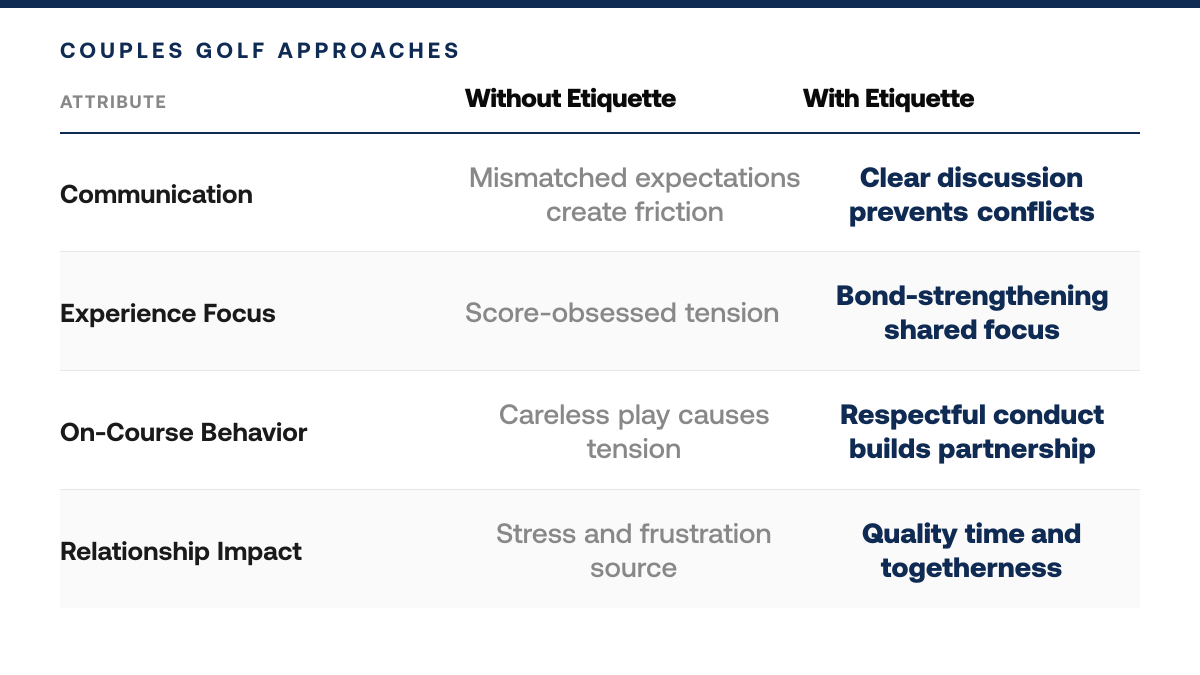
Golf etiquette exists for good reason. Proper on-course behavior reflects respect for the game, other players, and the course itself. When couples understand and practice these conventions, they signal consideration not just to strangers but to each other. Communication and courtesy become the foundation for enjoying rounds together without the friction that can arise from mismatched expectations or careless play.
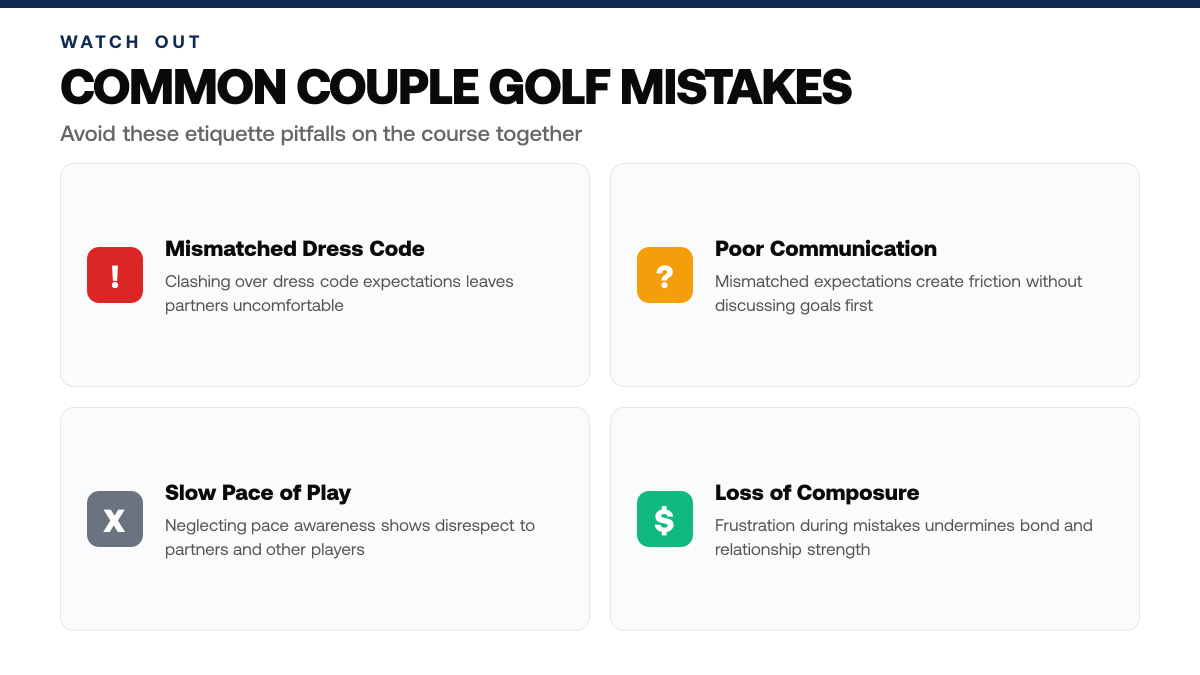
This guide covers the essential etiquette and communication strategies that make couple rounds genuinely enjoyable. You'll learn how to pace your play, manage distractions, handle mistakes gracefully, and keep the experience positive for both of you. Small adjustments to how you conduct yourselves on the course can transform golf from a source of stress into a reliable way to bond and share quality time together. Couples on the course often clash over dress code expectations and personal style, leaving one partner feeling unseen or uncomfortable — Haven Golf Company's Airflex™ polos let both players express individual identity and team pride while staying equally comfortable and performance-ready through eighteen holes.
Clear communication and mutual respect form the foundation of enjoyable golf for couples—discuss expectations before the round and stay supportive throughout.
Proper dress code, adherence to course rules, and awareness of pace of play demonstrate consideration for your partner and other golfers.
Composure during challenging moments and shared focus on the experience—not just the score—strengthen both your game and your relationship on the course.[3]
Understanding Golf Etiquette for Couples
What Is Golf Etiquette?
Golf etiquette is a set of behavioral standards and social norms that guide how players conduct themselves on the course. These standards encompass everything from pace of play and respect for the course to how you interact with your playing partners and other golfers. Unlike many sports with strict rule enforcement, golf relies heavily on self-regulation and mutual respect. Etiquette protects the experience for everyone by ensuring the game remains enjoyable, fair, and accessible. Whether you're playing casually or competitively, understanding and practicing proper etiquette demonstrates respect for the game's traditions and for your fellow players.[2]
Why Etiquette Matters for Couples
When you're playing golf with a partner, etiquette becomes even more important because your behavior directly affects their experience and enjoyment. Couples who understand etiquette standards develop stronger partnerships built on mutual respect, patience, and clear communication about expectations. Knowing the dress code, course rules, and social norms prevents misunderstandings and conflicts that can undermine the round. Good etiquette also means being honest about skill levels, supporting each other without distraction, and maintaining a positive attitude regardless of performance. These behavioral foundations transform a round of golf from a simple activity into a meaningful shared experience that strengthens your relationship.[2]
The Broader Context of Course Culture
Golf courses are communities with established traditions and unwritten rules that vary slightly from club to club. Understanding these norms—from how to handle pace of play to proper attire and cart etiquette—helps you integrate smoothly into the course environment. Couples who respect these standards contribute to a positive atmosphere that benefits all players, from beginners to experienced golfers. This shared commitment to etiquette creates a culture where everyone feels welcome and valued, making the course a place where people genuinely want to return and enjoy the game together. When you and your partner demonstrate respect for these traditions, you're not just following rules—you're participating in the golf community and affirming the values that keep the sport accessible and enjoyable for generations to come.
Step-by-Step Process
1. Agree on pace and expectations before the round
Before you tee off, have a brief conversation with your partner about what you both want from the round. Discuss whether you're playing competitively or recreationally, how much time you expect to spend on the course, and whether you'll be keeping score. Talk about support strategies—will you offer swing tips, or prefer to play independently? Clarify whether either of you has a tight schedule after the round. This upfront alignment prevents frustration mid-round and ensures you're on the same page about the experience you want to share. Setting expectations reduces ambiguity and allows both partners to mentally prepare for the type of round ahead, whether it's a casual outing focused purely on enjoyment or a more structured competitive format.
2. Maintain steady play by staying ready and keeping up
Play at a consistent pace by being prepared to hit when it's your turn—have your club selected and your approach planned before you step up to the ball. Keep up with the group ahead of you; if there's a gap, pick up the pace or let faster groups play through. A system like Haven Golf Company runs this in the background so nothing slips while the team is heads down. Manage the time between shots by walking briskly to your ball, limiting practice swings, and avoiding lengthy deliberation over club selection. A smooth, unhurried rhythm keeps the round enjoyable for everyone and prevents the frustration that can strain a couple's dynamic on the course. Steady pace also demonstrates respect for players behind you and maintains the flow that allows the entire course to operate smoothly throughout the day.
3. Practice quiet courtesy during others' swings
Remain silent and still when your partner or other players are addressing the ball or executing their swing. Avoid talking, moving, or making noise—even the smallest distraction can disrupt concentration. Position yourself out of the player's line of sight and peripheral vision. This discipline demonstrates respect and creates a calm atmosphere that benefits everyone's performance and composure, especially important when playing as a couple where mutual support hinges on genuine consideration. Maintaining this quiet courtesy is particularly valuable during crucial moments like pressure putts or recovery shots, where your composed presence can reinforce your partner's confidence.
4. Repair the course by raking bunkers and fixing ball marks
Take responsibility for maintaining the course during your round. After hitting from a bunker, smooth the sand with the rake so it's level and ready for the next group. This is the repetitive work platforms like Haven Golf Company are built to absorb. On the green, immediately repair any ball mark your ball creates by using a divot tool to lift the edges and gently tapping the area flat. If you notice damage from previous players, repair that too. These small acts of stewardship preserve the course for others, reflect well on you and your partner, and reinforce the etiquette culture that makes golf enjoyable for the entire community. By making course maintenance a joint effort, couples reinforce their partnership and demonstrate shared values about responsibility and respect for shared spaces.
How This Works in Practice
Example 1: Navigating a Tense Moment on the Back Nine
Picture a couple where one partner hits a poor shot and visibly frustrates. Rather than letting tension simmer, the other partner uses the walk to the next tee as a moment to offer encouragement—acknowledging the bad break without dwelling on it. By keeping conversation light and refocusing on the enjoyment of being outdoors together, they prevent a single hole from derailing the round. This simple act of emotional support, grounded in golf etiquette's emphasis on composure and respect, transforms what could have been a difficult dynamic into an opportunity to strengthen their partnership. The couple finishes the back nine with renewed connection, having demonstrated that pressure moments are chances to show up for each other.
Example 2: Celebrating a Shared Victory
Imagine a couple where both partners play reasonably well on a challenging par-4, and one of them sinks a crucial putt to save par. Instead of a solo celebration, the other partner genuinely congratulates them—a small gesture rooted in proper golf etiquette that honors the accomplishment without overshadowing the round. This mutual recognition of success, whether it's a birdie or simply a well-executed recovery, builds positive momentum. Over the course of 18 holes, these moments of authentic celebration accumulate, reinforcing the idea that their shared experience matters more than individual score. By the end of the round, both partners feel valued and connected, having communicated respect and joy throughout the day.
Why Etiquette Strengthens the Bond
These examples illustrate a core truth: proper etiquette and communication are not separate from the couple's relationship—they are the relationship at work. When both partners commit to composure, respect, and genuine encouragement, the golf course becomes a space where challenges are met with support and victories are shared. The result is not just a better round, but a stronger partnership built on the foundation of how you treat each other when it matters most. Couples who consistently practice these behaviors on the course often find that the habits of patience, encouragement, and accountability carry into their everyday lives, creating lasting positive changes in how they relate to each other beyond golf.
Pre-Round Golf Checklist for Couples
Select high-performance polos that reflect your personal style and boost confidence on the course.
Verify both players have properly fitted golf shoes with adequate grip for stability during the round.
Confirm you've packed essential equipment: golf balls, tees, markers, and a divot repair tool.
Review the course layout and establish a shared understanding of pace-of-play expectations together.
Discuss etiquette rules as a couple to ensure mutual respect and enjoyment throughout your round.
Check weather forecasts and plan appropriate layers to maintain comfort and focus during all 18 holes.
Confirm tee time reservations and communicate any course-specific dress code or equipment restrictions.
Common Mistakes to Avoid
Mistake: Failing to discuss skill levels and expectations before teeing off
Couples often assume their partner's abilities match their own, leading to frustration when one player significantly outperforms or underperforms the other. This mismatch erodes enjoyment and creates tension on the course. Before your round, have an honest conversation about handicaps, preferred pace, and realistic goals. Agree on a playing format that accommodates both skill levels—scrambles or best-ball formats level the playing field and keep the experience fun for both partners.[3]
Mistake: Rushing through play instead of maintaining course pace and etiquette
Impatience breeds resentment, especially when one partner struggles with a particular hole or shot. Hurrying undermines the shared experience and violates course etiquette toward other groups. Instead, establish a relaxed pace, take time to support each other between shots, and remember that golf is as much about the time together as the score. Patience transforms frustration into an opportunity to strengthen your partnership.[3]
Mistake: Neglecting shared responsibility for course maintenance and care
Couples who don't actively repair divots, rake bunkers, or replace ball marks together miss a chance to demonstrate teamwork and respect for the course. Poor course maintenance reflects badly on both players and detracts from the experience for future golfers. Make course care a joint commitment: divide tasks, remind each other gently, and take pride in leaving the course better than you found it. This shared responsibility reinforces partnership values beyond the scorecard.[3]
Frequently Asked Questions
How should couples handle competitive tension during a round?
Focus on playing your own game rather than keeping score against your partner. According to Chiputt Golf, the best approach is to agree beforehand on whether you're playing competitively or casually—this sets expectations and prevents frustration. If you do compete, make it lighthearted and remember that the primary goal is enjoying time together on the course.
What should we do if one partner is significantly better than the other?
Skill mismatches are common and manageable with the right mindset. Play from different tee boxes to level the challenge, or use a handicap system to make scoring fair. Chiputt Golf recommends that the stronger player focus on encouraging their partner and offering tips only when asked, keeping the experience fun rather than instructional.
What's the dress code for couples playing golf together?
Most courses require collared shirts, which means quality polos work perfectly for both partners. Check your specific course's rules, as some have additional requirements like no denim or specific shoe standards. Choosing performance apparel with comfort features ensures you both stay focused on your game rather than your clothing.