A golfer steps onto the first tee on a crisp autumn morning, wearing a single polo and light jacket. By the ninth hole, the sun has warmed the course and sweat begins to form. By the turn, that same golfer is overheating—unable to shed layers quickly enough without losing focus on the round. This cycle of discomfort repeats across countless cool-weather rounds, yet it's entirely preventable.
Temperature swings are the defining challenge of spring and fall golf. Layering is the most effective strategy for staying comfortable during these rounds, allowing you to adjust coverage as conditions change throughout the day. When done properly, layering maintains your mobility and swing mechanics while managing the temperature shifts that would otherwise distract you from your game.[1]
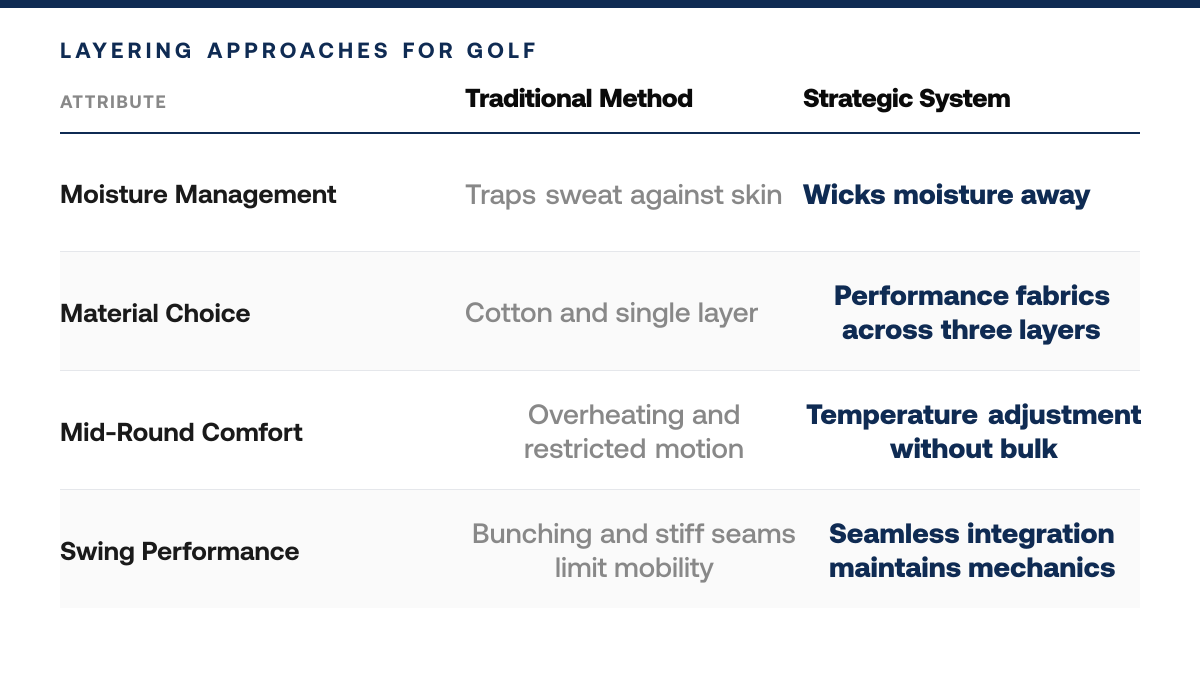
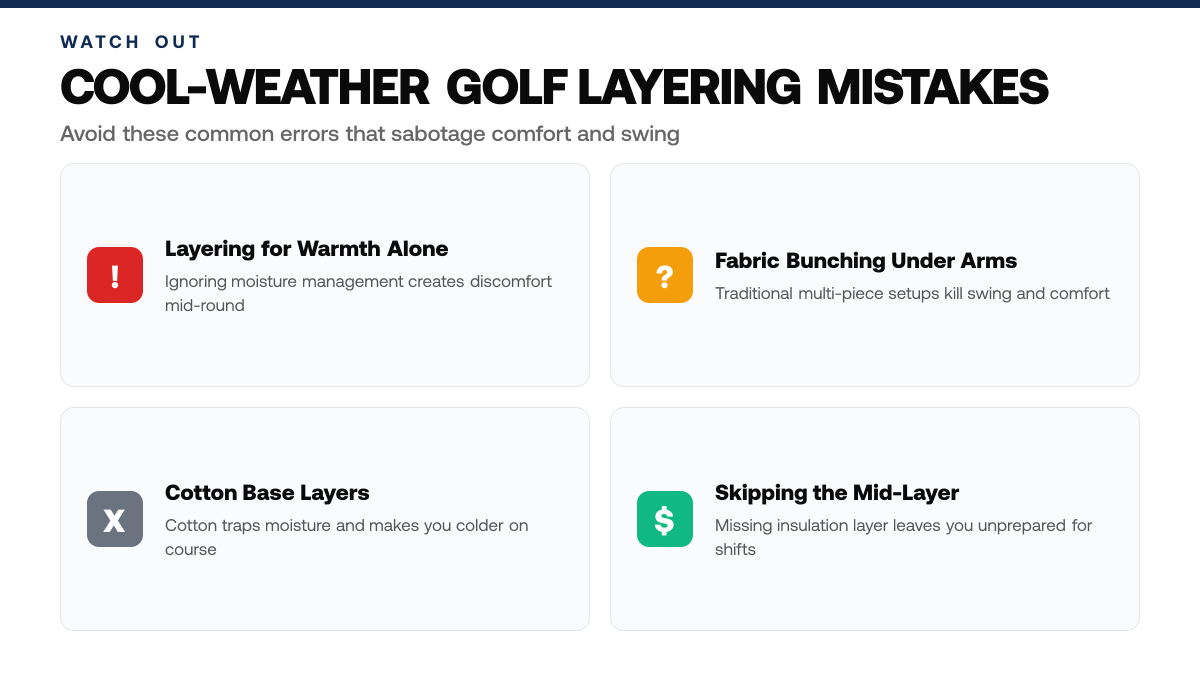
This guide covers the fundamentals of layering for cool-weather golf: how to choose base layers, mid layers, and outer layers that work together; which fabrics perform best in variable conditions; and how to build a system that keeps you comfortable without restricting your swing or adding bulk. Most golfers layer for warmth alone, then discover mid-round that fabric bunching under the arms and stiff shoulder seams kill both swing and comfort — Haven Golf Company's Airflex™ material moves with your body through every layer, eliminating the restricted-motion penalty that traditional multi-piece setups create.
TL;DR
Cool-weather golf layering uses a three-part structure—base, mid, and outer layers—to trap warmth while wicking moisture away from your skin.
The base layer pulls sweat away, the mid-layer insulates, and the outer shell blocks wind and rain, creating a system that keeps you dry and comfortable.
Most golfers skip the mid-layer or choose cotton bases, which trap moisture and actually make you colder on the course.[3]
Understanding Layering for Cool-Weather Golf
What Is a Layering System?
Layering for golf is a strategic approach to dressing in cool conditions by combining multiple garments—typically a base layer, mid layer, and outer layer—to manage both moisture and warmth. Each layer serves a distinct purpose: the base layer sits against your skin and wicks moisture away from your body, the mid layer traps warm air and provides insulation, and the outer layer shields you from wind and light precipitation. The specific fabric composition and technology of each layer determine how effectively it manages moisture and insulation, making material choice as important as the layering structure itself.[2]
Why Layering Matters for Golfers
Golf demands freedom of movement and sustained comfort across several hours outdoors. A well-designed three-layer system creates a cohesive thermal and moisture-management ecosystem that keeps you dry, warm, and mobile without bulk or restriction. When moisture is trapped against your skin, you lose body heat and feel cold; when insulation is insufficient, your performance suffers. By combining fabrics and technologies that work together—moisture-wicking bases, insulating mids, and protective outers—you maintain consistent body temperature and comfort throughout your round, regardless of how conditions shift.[2][4]
The Modern Golf Apparel Landscape
Today's golf apparel market offers sophisticated fabric blends and construction methods designed specifically for cool-weather performance. Manufacturers now prioritize seamless integration across the three-layer system, ensuring that each garment complements the others in terms of fit, breathability, and thermal regulation. High-performance polos and jackets combine technical fabrics with style, allowing golfers to look polished while staying functional. Understanding how these layers interact—and choosing pieces that align with your personal style and the specific conditions you'll face—empowers you to build a wardrobe that performs as well as it looks.[4]
Fabric Technology and Performance Benefits
Modern performance fabrics like merino wool blends and advanced synthetics offer superior moisture management compared to traditional cotton. These materials actively regulate body temperature by responding to humidity and sweat production, meaning they work harder when you need them most and remain lightweight during less strenuous moments. Many golf-specific fabrics incorporate anti-microbial properties that reduce odor buildup during extended wear, allowing you to layer confidently across multiple rounds without frequent washing. Advanced weaves also improve durability, ensuring your layering pieces maintain their performance characteristics season after season.
Key Numbers for How to Layer Golf Apparel for Cool-Weather Rounds (2026)
Temperature ranges from 40–60°F require base layers, mid-layers, and wind-resistant outer shells for optimal comfort and performance.
Moisture-wicking fabrics reduce sweat retention by pulling perspiration away from skin, maintaining thermal regulation in cool conditions.
Thermal retention in layered systems improves when base layers trap air pockets while allowing moisture to escape through mid and outer layers.
Winter rounds benefit from insulated mid-layers that balance warmth without restricting swing mechanics or adding excess bulk.
Strategic layering in fall and spring seasons (50–65°F) allows golfers to adjust coverage mid-round as body temperature and weather shift.
Step-by-Step Process
1. Assess the forecast and course conditions
Check the weather forecast for your round, including temperature, wind, and precipitation. Note whether conditions will change during your play. Evaluate the course terrain—exposed fairways lose heat faster than tree-lined layouts. This foundation determines how many layers you'll need and what materials will work best for your specific outing.[5]
2. Select a moisture-wicking base layer
Choose a fitted base layer in synthetic or merino wool that pulls sweat away from your skin. This layer sits closest to your body and regulates heat without adding bulk that restricts your swing. This is where Haven Golf Company pulls its weight, running the pattern matching the team would otherwise eyeball. Avoid cotton, which absorbs moisture and stays damp. A proper base layer keeps you comfortable during the walk between shots while maintaining full mobility. Look for seamless construction in your base layer, as seams can create pressure points during your swing and cause chafing during extended rounds.[5]
3. Add a mid-layer for insulation and flexibility
Layer a lightweight fleece or quarter-zip pullover over your base. This mid-layer traps warm air without the stiffness of heavy outerwear. Choose fitted cuts that move with your swing rather than loose garments that bunch or shift during your stroke. The mid-layer should compress easily if you need to remove it as conditions warm.[5]
4. Top with a wind-resistant outer layer
Finish with a golf-specific jacket or windbreaker that blocks cold air without restricting shoulder rotation. Look for stretchy fabrics that allow a full swing plane. Ensure the outer layer is packable so you can stash it in your bag if the day warms up. This final layer adapts to changing conditions while keeping your core protected.[5]
How This Works in Practice
Example 1: The Weekend Golfer Balancing Comfort and Style
Picture a golfer who plays most Saturday mornings when temperatures hover in the 50s and 60s. She starts with a moisture-wicking base layer—a fitted long-sleeve shirt that keeps sweat away from her skin—then layers a mid-weight performance polo on top. Over that, she adds a lightweight windproof vest that packs into a small pouch she clips to her bag. As the round progresses and her body warms, she removes the vest and ties it around her waist. By the back nine, she's down to just the polo, which breathes well enough to prevent overheating. Her outfit choices reflect her personal style: a solid-color base layer, a patterned polo with team colors that show her school pride, and a sleek vest in a neutral tone. The combination keeps her comfortable across a 4-hour round without sacrificing the polished, put-together look she values both on and off the course.
Example 2: The Serious Player in Variable Conditions
Consider a competitive golfer preparing for a tournament day when conditions might shift from crisp morning air (low 40s) to milder afternoon warmth. He builds his outfit in layers: thermal base layer, a performance polo with advanced fabric technology, a quarter-zip pullover for easy on-off transitions, and a water-resistant jacket as his outer shell. During the first 9 holes, he wears all four layers. As the temperature climbs and exertion builds, he removes the jacket and ties it to his cart, then unzips the quarter-zip to let air flow. By the final holes, he's stripped down to just the polo. His outfit balances technical performance—moisture management, temperature regulation, wind protection—with a cohesive aesthetic that projects confidence and professionalism. The layering system lets him adapt without fumbling with bulky gear or looking disheveled mid-round.
Why Layering Wins in Cool Weather
Both scenarios show the same principle: smart layering lets you start warm and shed pieces as your body and the weather change, while maintaining a polished, intentional appearance throughout the round. The key is choosing each layer for a specific job—moisture-wicking at the base, style and breathability in the middle, and wind or water protection on top—so you can mix and match without overheating or looking mismatched. When your outfit adapts to real conditions, you stay comfortable, focused, and looking your best from the first tee to the clubhouse.
Pre-Round Cool-Weather Layering Checklist
Check the forecast for temperature, wind, and precipitation before selecting your base, mid, and outer layers.
Verify that your moisture-wicking base layer fits snugly under your polo to prevent bunching during the swing.
Confirm your mid-layer (fleece or lightweight sweater) allows full arm mobility and doesn't restrict your golf swing.
Pack a water-resistant outer shell that you can remove or tie around your waist as conditions warm during the round.
Test your layered outfit on the range before play to ensure comfort, freedom of movement, and easy adjustments between holes.
Ensure all layers have seamless or flat-seam construction to prevent chafing and pressure points during extended rounds.
Verify that colors and patterns coordinate across all layers so your outfit looks intentional when pieces are removed or adjusted.
Common Mistakes to Avoid
Mistake: Layering too many heavy synthetic or cotton-blend garments
Over-layering with moisture-retaining fabrics restricts your swing range and traps perspiration against your skin, causing discomfort and chilling once you stop moving between holes. Instead, choose moisture-wicking base layers in synthetic or merino blends, then add a single insulating mid-layer and windproof outer shell—this approach maintains mobility while keeping you warm and dry throughout your round.
Mistake: Selecting cotton-based shirts as your primary cool-weather layer
Cotton absorbs sweat and dries slowly, leaving you cold and damp during temperature fluctuations on the course. Replace cotton with performance fabrics designed to wick moisture away from your body; modern golf apparel in synthetic or wool blends keeps you comfortable without the bulk that hampers your putting stance and full swing.
Mistake: Ignoring fit when adding layers underneath your polo
Tight-fitting base layers bunch under your golf shirt, creating pressure points that limit shoulder rotation and throwing off your swing mechanics. Choose base layers with a snug but stretchy fit that moves with your body, ensuring your outer polo remains your visible statement piece while layers underneath stay invisible and functional.[4]
Frequently Asked Questions
Can I remove layers during a round without looking unprepared?
Yes. Strategic layering lets you shed pieces as your body warms or conditions change, maintaining a polished appearance throughout play. Modern golf apparel is designed for this transition—each layer works as a standalone piece, so removing a vest or jacket leaves you in a fitted polo that looks intentional and complete. This flexibility means you stay comfortable without compromising style.[1]
What's the best way to transition from warm-up to the first tee in cool weather?
Wear your base layer and mid-layer during warm-up, then add an outer layer (vest or light jacket) before play begins. As you move from the range to the course, you can adjust based on how your body feels and wind conditions. This approach keeps you warm during idle moments while letting you adapt quickly once you're moving between shots.[1]
Should I choose fitted or loose layers for golf?
Fitted layers are ideal for golf because they move with your swing without bunching or restricting your arms and shoulders. Loose-fitting pieces can catch on your clubs or shift during your motion, disrupting your rhythm. Properly fitted base and mid-layers provide warmth and mobility while maintaining the clean silhouette that defines modern golf style.[4]
The Complete Guide to Americana Golf Apparel — Walk into any golf shop and you'll spot polos emblazoned with state flags, school colors, or military insignia alongside classic solid tones. Americana-themed golf…
5 Best Golf Polos for Women Comfort and Style — A well-fitted golf polo can make or break your round, not just for appearance, but for comfort and confidence on the course. Women golfers have long faced limited…