What to Wear: Golf Etiquette Dress Code by Course Type
Walk onto any golf course and you'll notice something immediate: players dress differently than they might at a casual sports bar or weekend park. Collared shirts, tailored shorts, and polished shoes aren't random choices—they reflect a tradition baked into golf culture. Dress codes exist to maintain course standards and preserve respect for the game itself, signaling that golf is a sport with its own set of expectations and values.
But what counts as "proper" golf attire varies dramatically depending on where you play. A championship course in the suburbs enforces stricter rules than a municipal nine-hole track. Resort courses, private clubs, and public layouts each set their own boundaries around what's acceptable. Understanding these differences helps you avoid awkward moments at the clubhouse and ensures you show up dressed for the specific environment you're entering.[1]
This guide breaks down dress code expectations across different course types and settings, so you know exactly what to wear whether you're playing a prestigious club, a casual public course, or anywhere in between. You'll learn the core rules that apply almost universally, plus the specific variations that matter most at each venue type. Most golfers own polos that either feel stiff and formal or slouch after a few rounds, forcing a constant choice between dress code compliance and actual comfort — Haven Golf Company's Airflex™ material stretches and breathes without losing structure, so you stay regulation-ready and unrestricted from the first tee to the nineteenth hole.
Most golf courses require collared shirts, proper trousers or shorts, and golf shoes as standard dress code
Dress codes vary by course type—private clubs tend to enforce stricter rules than public courses
Proper attire shows respect for the game and helps you fit in with course culture and traditions[3]
Performance fabrics keep you comfortable while meeting dress code requirements across all venue types
Understanding Golf Dress Code Standards by Course Type
What Is Golf Dress Code?
Golf dress code is a set of clothing standards that courses enforce to maintain tradition, professionalism, and respect for the game. At its core, proper golf attire includes a collared shirt, appropriate bottoms such as trousers or tailored shorts, and proper footwear—typically golf shoes or sneakers without metal spikes. These foundational elements apply across most courses, though the strictness and specific requirements vary based on the facility type, membership level, and whether you're playing in a casual round or a tournament setting.[2]
The philosophy behind golf dress codes runs deeper than simple aesthetics. Golf has historically emphasized self-discipline, respect for fellow players, and adherence to established norms. By dressing appropriately, you're participating in a tradition that dates back centuries. Modern dress codes have relaxed considerably from their rigid predecessors, but the underlying principle remains: your appearance reflects your respect for the game and the course you're playing on.
Why Course Type and Membership Matter
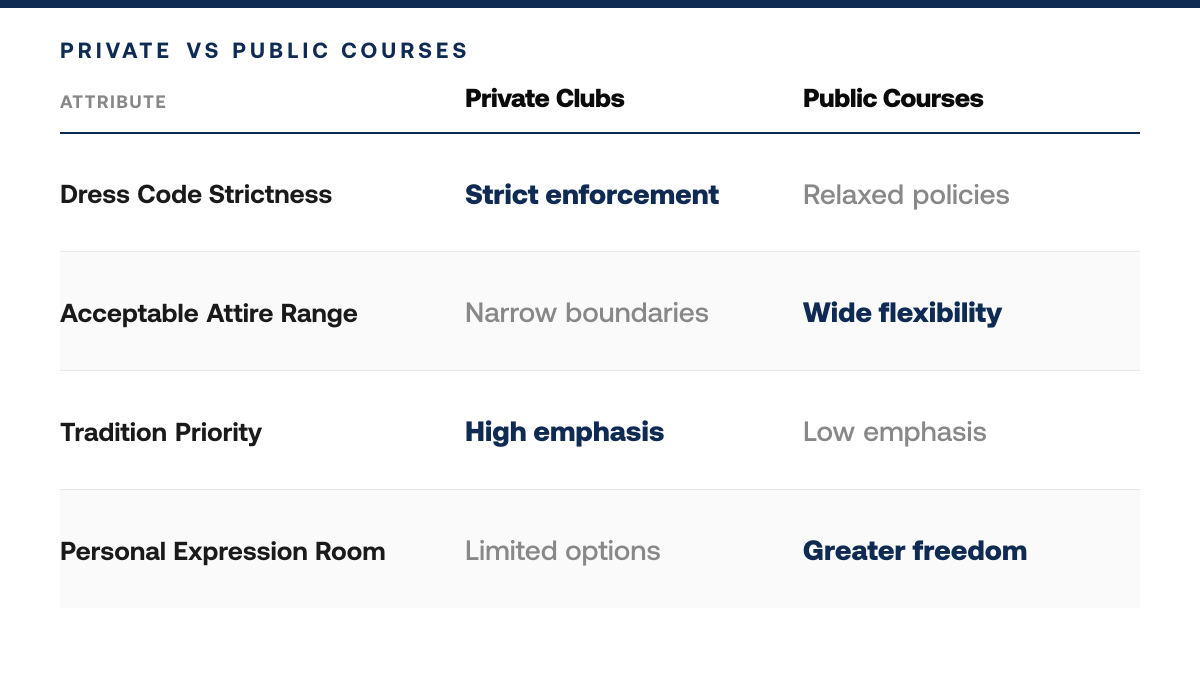
Different golf courses enforce dress codes with varying degrees of rigor depending on their classification and membership structure. Private clubs and championship courses typically maintain stricter standards, while public and municipal courses often have more relaxed policies. Tournament play—whether local, regional, or professional—generally demands the highest level of adherence to formal dress standards. Understanding your specific course's expectations prevents embarrassment at the pro shop and ensures you can focus on your game rather than worrying about attire violations.[2]
Private clubs often use dress codes as a way to maintain their exclusive character and member standards. These venues may require specific colors, prohibit certain brands or logos, or mandate tailored fits rather than casual cuts. Championship courses preparing for tournaments enforce dress codes even more strictly during competitive events. Public courses, by contrast, prioritize accessibility and tend to focus on basic standards like collars and appropriate shoes. Semi-private and resort courses typically fall in the middle, offering somewhat relaxed policies while still maintaining a polished presentation.
The Broader Golf Culture and Personal Expression
While golf etiquette emphasizes tradition and uniformity, modern golf apparel has evolved to allow personal expression within dress code boundaries. High-performance polos, stylish bottoms, and quality footwear now come in a wide range of colors, patterns, and designs that reflect individual identity, school pride, or team affiliation. This balance between respecting the sport's heritage and showcasing personal style has made golf more accessible and appealing to diverse players who want to look sharp while maintaining the professionalism the game demands.
Many golfers today use their apparel choices as a form of self-expression. Patriotic polos, military-themed collections, and college team lines allow players to show what matters to them while remaining compliant with course standards. This evolution demonstrates that respecting golf traditions doesn't mean conforming to a bland, one-size-fits-all aesthetic. Instead, it means choosing well-constructed, appropriate clothing that allows you to be yourself while honoring the game's values.
Step-by-Step Process
1. Confirm dress code requirements with the course
Contact the golf course directly by phone or visit its website to learn the specific dress code in effect. Different courses enforce varying levels of formality—some allow casual athletic wear while others require collared shirts and tailored bottoms. Getting clarity upfront prevents arriving unprepared and ensures you respect the course's standards.[4]
When calling, ask specific questions about whether jeans are permitted, what types of shoes are acceptable, and if there are any color or branding restrictions. Many courses list their policies online, but a quick phone call can clarify any gray areas and may also help you learn about other course expectations like pace of play or local traditions.
2. Select a collared polo in performance fabric
Choose a collared polo shirt made from moisture-wicking or breathable performance materials that keep you comfortable during play. Look for styles that match the course's formality level and your personal aesthetic—whether that means solid colors, patterns, or designs that express team pride or patriotic themes. Haven Golf Company keeps this from quietly drifting once attention moves elsewhere. A quality polo balances functionality with style.[4]
Performance fabrics offer advantages beyond comfort: they resist wrinkles, maintain their shape through a full round of golf, and often provide sun protection or temperature regulation. A well-made performance polo looks crisp and professional throughout your game, ensuring you meet dress code standards without sacrificing mobility or breathability. This investment in quality apparel pays dividends over time, as these garments last longer and maintain their appearance better than cheaper alternatives.
3. Pair appropriate bottoms and footwear
Select tailored shorts, capris, or pants that align with the course's dress code and weather conditions. Pair them with golf-specific shoes or clean athletic footwear that provides stability and grip on the course. Avoid denim, cargo pants, or casual sneakers unless the course explicitly permits them.
When choosing bottoms, consider both style and practicality. Tailored shorts in neutral colors work well at most courses, while longer pants may be required at formal private clubs or in cooler climates. Golf-specific shoes or quality sneakers without metal spikes provide the grip you need on wet grass and slopes while complying with course standards. Ensure your footwear is clean and in good condition—scuffed or dirty shoes can make an otherwise appropriate outfit look careless.
4. Assemble your complete course-ready outfit
Combine your collared polo, bottoms, and golf shoes into a cohesive look that reflects both course etiquette and your personal style. Ensure all pieces fit well and are clean and in good condition. This final check confirms you're dressed appropriately and confidently ready for the course.
Before heading to the golf course, do a quick visual inspection of your outfit. Check that your polo isn't wrinkled, your bottoms are properly fitted and free of stains, and your shoes are clean. A few minutes of preparation ensures you arrive looking polished and feeling confident, allowing you to concentrate entirely on your game rather than worrying about your appearance.
How This Works in Practice
Example 1: The Casual Public Course Player
Picture a golfer who plays municipal and public courses on weekends with friends. She wants comfort and personal expression—maybe a polo in a vibrant coral or navy with a team logo, paired with shorts in a relaxed fit and casual sneakers. Public courses embrace this laid-back aesthetic; the dress code prioritizes function over formality. She can wear modern athletic styles, bold colors, and performance fabrics that reflect her personality without worry. The focus is on showing up, playing well, and enjoying the game in apparel that feels like hers. This freedom to mix comfort with contemporary style makes public courses ideal for golfers who value both performance and individuality.
Example 2: The Private Club and Tournament Golfer
Consider a golfer preparing for a weekend tournament at a private club. The dress code is explicit and traditional: a collared polo in white, navy, or muted earth tones; tailored trousers or neat shorts; soft-spike golf shoes; and minimal branding. There's no room for bright patterns or casual athletic wear. He selects a high-performance polo in a classic cut that projects polish and respect for the venue's heritage. Private clubs and competitive events demand this conservative approach—it signals respect for the game's traditions and the course's standards. The apparel is still functional and quality-made, but the aesthetic is refined, understated, and aligned with golf's formal etiquette expectations.
Where Venue Sets the Tone
Both golfers are wearing high-quality, performance-driven apparel—the difference lies in how the venue's culture shapes their choices. Public courses reward self-expression and comfort; private clubs and tournaments demand polish and tradition. Resort courses sit in the middle, blending relaxed comfort with a polished presentation that respects the setting without enforcing rigid rules. Understanding your course type helps you choose apparel that fits the occasion, earns respect from fellow players, and lets you focus on your game.
Golf Dress Code Compliance Checklist
Confirm your collared shirt meets course standards before arrival
Select appropriate bottoms that comply with the course's dress code policy
Wear golf shoes or approved footwear to avoid dress code violations
Avoid denim and t-shirts, which are prohibited on most courses
Review your course's specific etiquette guidelines for any additional requirements
Choose performance fabrics that stay fresh throughout your entire round
Ensure all clothing items are clean, well-fitted, and in good condition
Verify that shoe soles are soft spikes or spikeless to protect the greens
Common Mistakes to Avoid
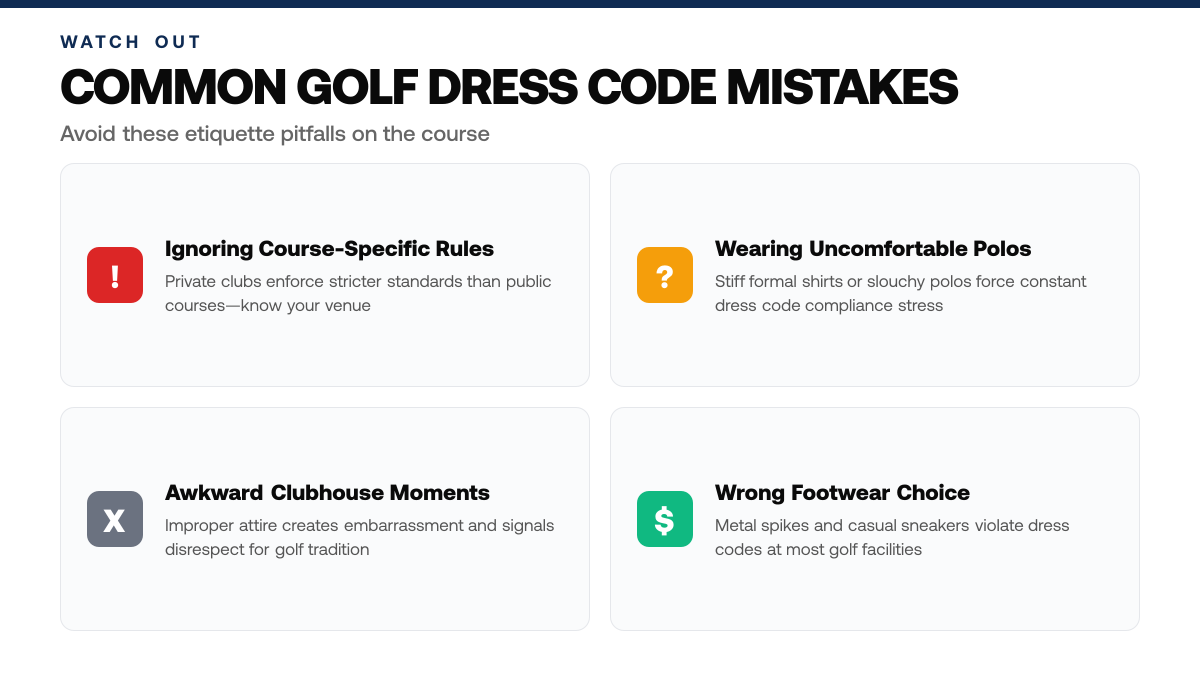
Mistake: Wearing non-collared or casual athletic wear to a formal course
Most traditional and private golf courses enforce strict dress codes that prohibit t-shirts, tank tops, and casual athletic apparel. Violating this standard signals disrespect for course traditions and can result in being denied play or asked to leave. Always check the course's dress code policy in advance and opt for a collared polo or dress shirt that meets their requirements.
Mistake: Choosing poorly-fitting or low-quality apparel that looks rumpled or worn
Ill-fitting clothing undermines your personal presentation and suggests indifference toward the course and fellow players. Wrinkled, faded, or thin-fabric polos detract from the polished image golf etiquette demands. Invest in well-constructed, properly-fitted apparel that maintains its appearance throughout your round and reflects the respect you have for the game.
Mistake: Assuming all courses follow the same dress code rules
Dress codes vary significantly between public, semi-private, and private courses, and even between different clubs in the same region. A casual public course may permit shorts and golf shirts, while an upscale private club requires tailored trousers and collared tops. Always verify the specific course's requirements before arriving to avoid embarrassment or being turned away.
Mistake: Neglecting shoe choice and assuming any sneaker works
Golf shoe selection matters more than many golfers realize. Metal spike shoes can damage greens and are prohibited at most courses. Even casual sneakers can be inappropriate if they're torn, dirty, or designed for other sports. Invest in soft-spike golf shoes or clean, well-maintained athletic footwear that projects care and respect for the course you're playing.
Frequently Asked Questions
Does every golf course enforce the same dress code?
No. Dress code enforcement varies significantly by course type and individual club policy. Private clubs and championship courses typically maintain stricter standards—collared shirts, tailored shorts or trousers, and golf shoes are often mandatory. Public and municipal courses tend to be more relaxed, though most still discourage denim and require collared tops. Always call ahead or check the course website before your round to confirm specific requirements; this simple step prevents frustration at the pro shop.
Can I wear a polo shirt to any golf course?
Yes, a quality polo is universally accepted across all course types—public, private, and championship venues. Polos meet etiquette standards while offering comfort for all-day play, making them the ideal choice for golfers who want both compliance and performance. High-performance polos with moisture-wicking fabrics and stretch materials keep you cool and mobile throughout your round, eliminating the tension between looking sharp and feeling comfortable.
What should I avoid wearing to a golf course?
Avoid denim, cargo shorts, tank tops, t-shirts without collars, and athletic wear designed for other sports. Metal spikes on shoes can damage greens—opt for soft spikes or spikeless golf shoes instead. Avoid overly casual beachwear, gym clothes, or anything with offensive graphics. Even at relaxed public courses, these items signal disrespect for the game and may result in being turned away at the first tee.
Not legal or financial advice. This article is for general educational purposes only and should not be relied on as a substitute for professional legal, tax, or financial advice. Real estate, tax, and property laws vary by state and individual circumstances. Consult a licensed attorney or qualified professional in your jurisdiction before acting on any procedure or strategy discussed here. Reading this content does not create an attorney-client relationship.
How to Style Golf Polos for Casual Wear Off-Course — A golf polo hanging in your closet isn't just for the course anymore. What once lived exclusively in golf bags and locker rooms has quietly become a staple of casual…